The line
"High functioning" and "low functioning" are not representative of individuals' needs. A linear analogy leaves out life's nuances.
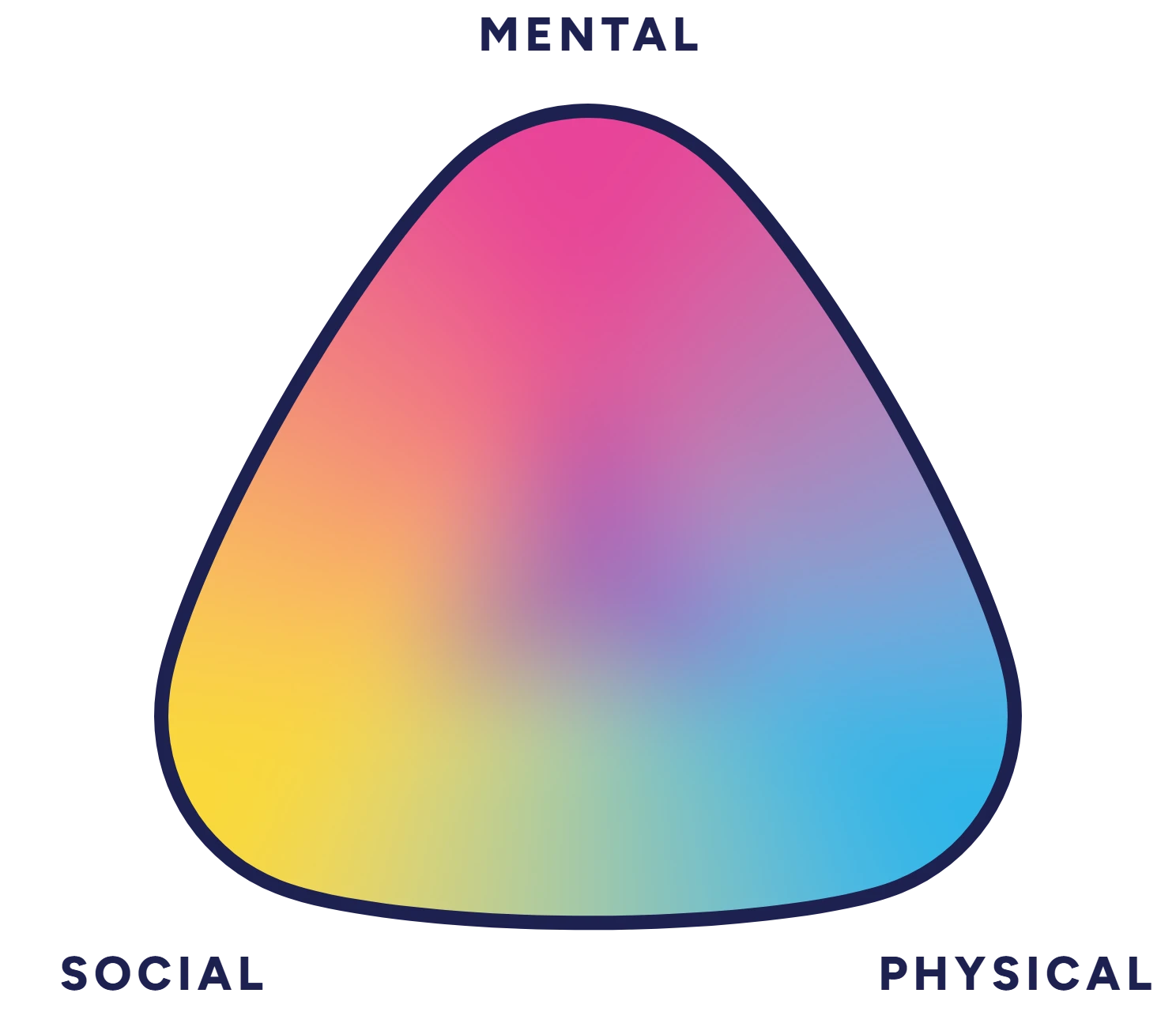
Three sides of life: mental, social, and physical. You can present no social traits, yet have strong physical and mental ones and still be autistic. The Spectrum Triangle shows all three at once with your individualized intensity.
Traits and symptoms present differently for each person, and many are hidden by masking. A single line can't hold that.
"High functioning" and "low functioning" are not representative of individuals' needs. A linear analogy leaves out life's nuances.
Language, sensory processing, executive function, and more, as slices of a wheel. Better, but difficult to interpret.

Mental, social, and physical, each flowing in from its own corner and blending where they meet. The more intense and combined your traits, the fuller and darker the center.
Select the traits you find relatable. Each side fills in from its own corner, the colors blend where they meet, and when all three are intense the center deepens.
Each self-assessment fills in one or more sides of your triangle. Every test you take contributes more data to your personal triangle.
The traits you select above are your self-assessment. Your tests combine into a second triangle. Where the two differ is worth noticing: masking, for example, can hide traits from yourself and others.
DSM-5 levels indicate support needs, not how "functional" someone is. On the triangle these levels are represented not as clear steps, but saturation of color.
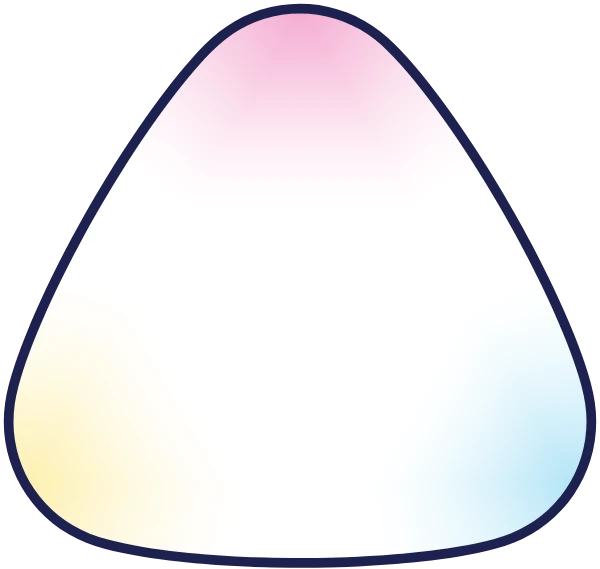
May experience some traits.

Experiences traits on every side.

Traits blend together requiring external support.

All three, intensely. For example: non-speaking with significant executive dysfunction.